Trinidad Scorpion: the fiery pepper for true heat lovers
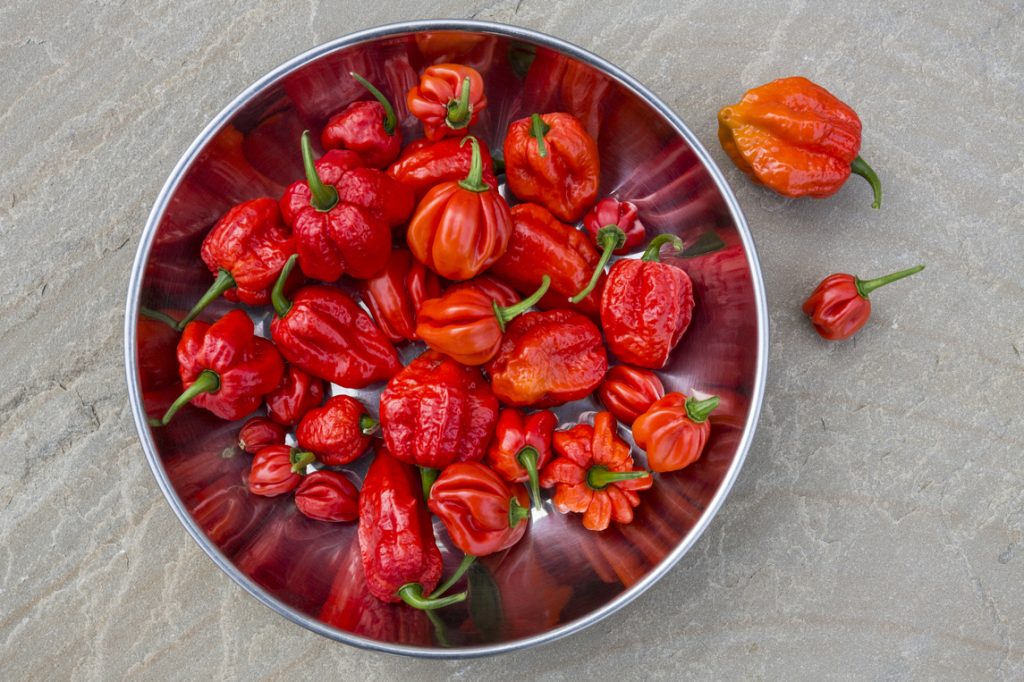
Are you crazy about spicy food and dare to take on the challenge with one of the hottest peppers in the world? The Trinidad Scorpion is a powerhouse that brings sweat to the foreheads of even the most seasoned chili lovers. This fiery beauty, originating from Trinidad and Tobago, belongs to the top of the Scoville scale.
Curious about how to use this pepper, where it comes from, and if it’s really as hot as they say? Read all about it here.
The history and origin of the Trinidad Scorpion
The history of the Trinidad Scorpion begins on the tropical islands of Trinidad and Tobago. This fiery pepper belongs to the Capsicum chinense family. The name ‘Scorpion’ refers to the characteristic pointed ‘tail’ at the end of the pepper. The Trinidad Scorpion became world-famous in 2011, when the ‘Butch T’ variant was officially recognized as the hottest pepper in the world. The pepper is loved for its extreme heat and complex flavor profile. In Trinidad, this pepper is an essential part of traditional dishes.
The extreme heat: Trinidad Scorpion Scoville values unraveled
The Trinidad Scorpion scores impressively high on the Scoville scale, with values between 1.2 million and 2 million Scoville Heat Units (SHU). The extreme heat is caused by the high concentration of capsaicin. There are different variants of the Trinidad Scorpion, each with their own Scoville rating:
- Trinidad Scorpion Butch T: 1,463,700 SHU
- Trinidad Scorpion Moruga: up to 2,000,000 SHU
- Trinidad Scorpion Yellow: approximately 1,200,000 SHU
When working with Trinidad Scorpion peppers, it’s essential to take precautions such as wearing gloves and ensuring good ventilation while cooking.
Culinary applications
Despite its extreme heat, the Trinidad Scorpion is versatile in the kitchen, but primarily when processed into a sauce. Trinidad Scorpion sauce balances the intense heat with ingredients such as fruit, vinegar, garlic, and herbs.
Sauces containing the Trinidad Scorpion are perfect for marinades, stews, and even cocktails. But be careful, the pepper is really hot and the same goes for most sauces containing this pepper. A few drops in your soup or stew is often enough.
Besides sauces, the Trinidad Scorpion is also used in infused oils, dry spice mixes, and even chocolate. But here too, add only small amounts of the pepper, otherwise your spice mix will only be for the real daredevils.
Growing your own Trinidad Scorpion
Want to grow this challenging pepper yourself? With the right approach, you can grow these peppers in your own garden. Make sure you have quality seeds, potting soil, pots, a sunny spot, and patience. Trinidad Scorpion plants can grow up to 1.2 meters tall and produce 20-30 peppers per plant. Some challenges include aphids and fungal diseases, but with proper care, you can harvest an abundance of peppers. Our tip: make sure you have the right protection during harvesting.
Heatsupply’s Trinidad Scorpion assortment
Heatsupply offers a wide range of hot sauces with Trinidad Scorpion as an ingredient. These sauces combine the fiery heat of the pepper with other flavorful ingredients to provide a unique taste experience. Whether you’re looking for a sauce for marinades, stews, or as an addition to your favorite dishes, Heatsupply has a selection that brings out both the heat and the complex flavors of the Trinidad Scorpion.
A selection of Trinidad Scorpion sauces at Heatsupply:
- Heartbeat Scorpion
- Crazy Bastard Sauce Trinidad Scorpion & Clementine
- Karma Scorpion Disco Hot Sauce
- Melinda’s Scorpion Hot Sauce
- Secret Aardvark Red Scorpion Hot Sauce
Discover the world of extreme heat with Trinidad Scorpion
Now that you know everything about the Trinidad Scorpion, you’re ready to integrate this pepper into your culinary adventures. For beginners, we recommend first experimenting with ready-made Trinidad Scorpion sauces. When you’re ready for the next step, try a small piece of fresh Trinidad Scorpion in a dish. Don’t forget to have dairy products on hand to alleviate the heat. Do you dare to take the challenge?